

Guides
51 practical guides to projection screens – from choosing the screen type, size and fabric to installation and control. Plus a screen size calculator and a glossary.
Choosing a screen
Type, size, aspect ratio and matching the screen to your projector.
How to choose a projection screen – 7 decisions, step by step
How to choose a projection screen for your home, business or school: location, mounting, size, aspect ratio, fabric, tensioning and control. A decision tree and common mistakes.
How to choose the size of a projection screen
How to match projection screen size to viewing distance: the D/6, D/4 and Ds/2.5 formulas, size tables, worked examples, the front row and mounting height.
Projection screen sizes – diagonal chart
Projection screen diagonal chart from 60 to 300 inches: image width and height in cm for 16:9, 16:10, 4:3 and 2.35:1, plus formulas for converting inches.
Screen aspect ratio: 16:9, 16:10 or 2.35:1
Which projection screen aspect ratio to choose: 16:9, 16:10, 4:3, 1:1 or cinema 2.35:1? A format table, projector vs format, anamorphic lenses and multi-format screens.
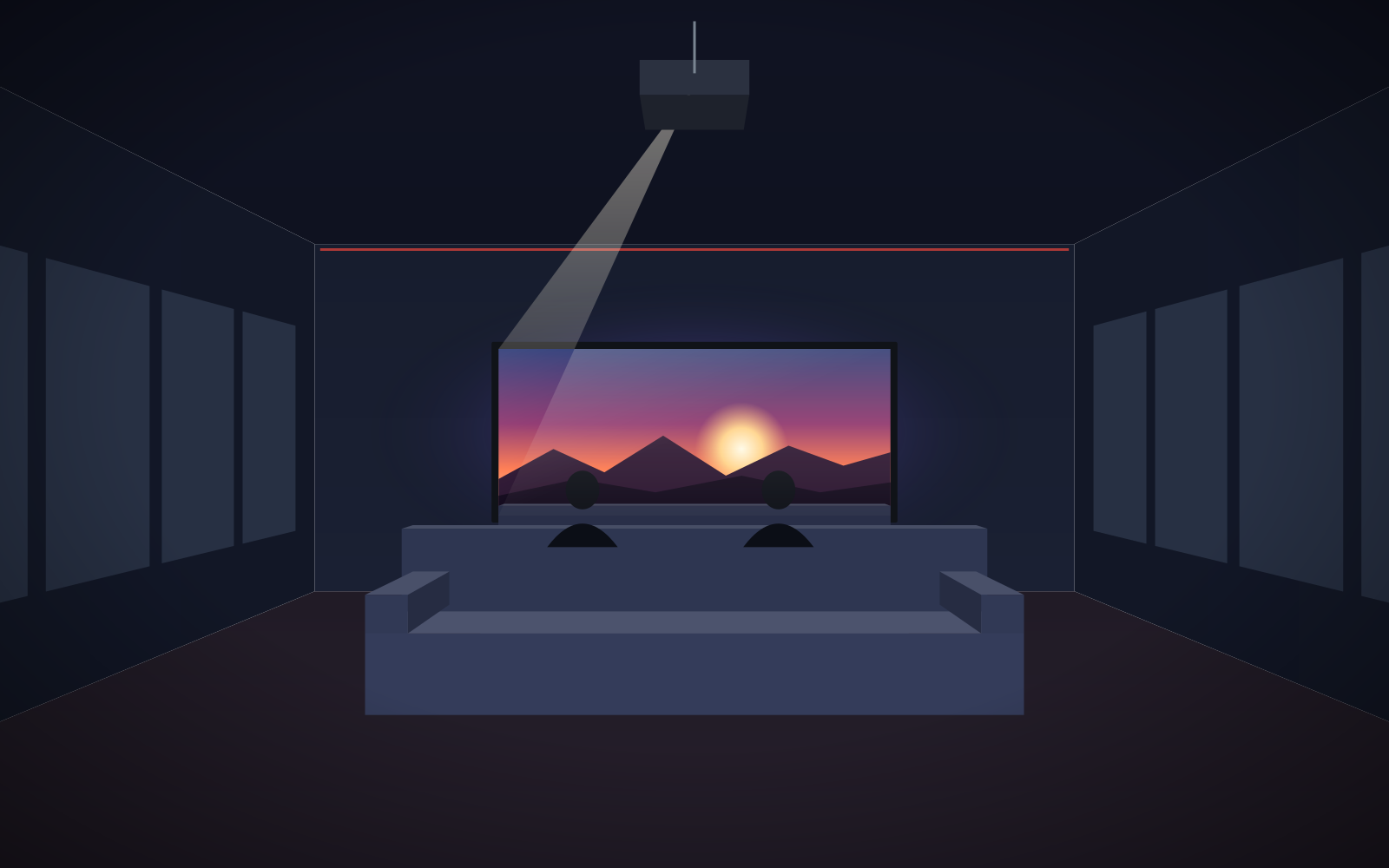
Fixed-frame or motorised screen – a comparison
Fixed-frame or motorised roller screen: fabric flatness, looks, space, ALR and acoustic fabrics, UST projectors and cost. When to choose Tensio side tensioning.
How to match a screen to a projector – step by step
How to match a screen to a projector: resolution and aspect ratio, throw ratio and image width, lumens vs size and gain, UST and ST projectors, with worked examples.
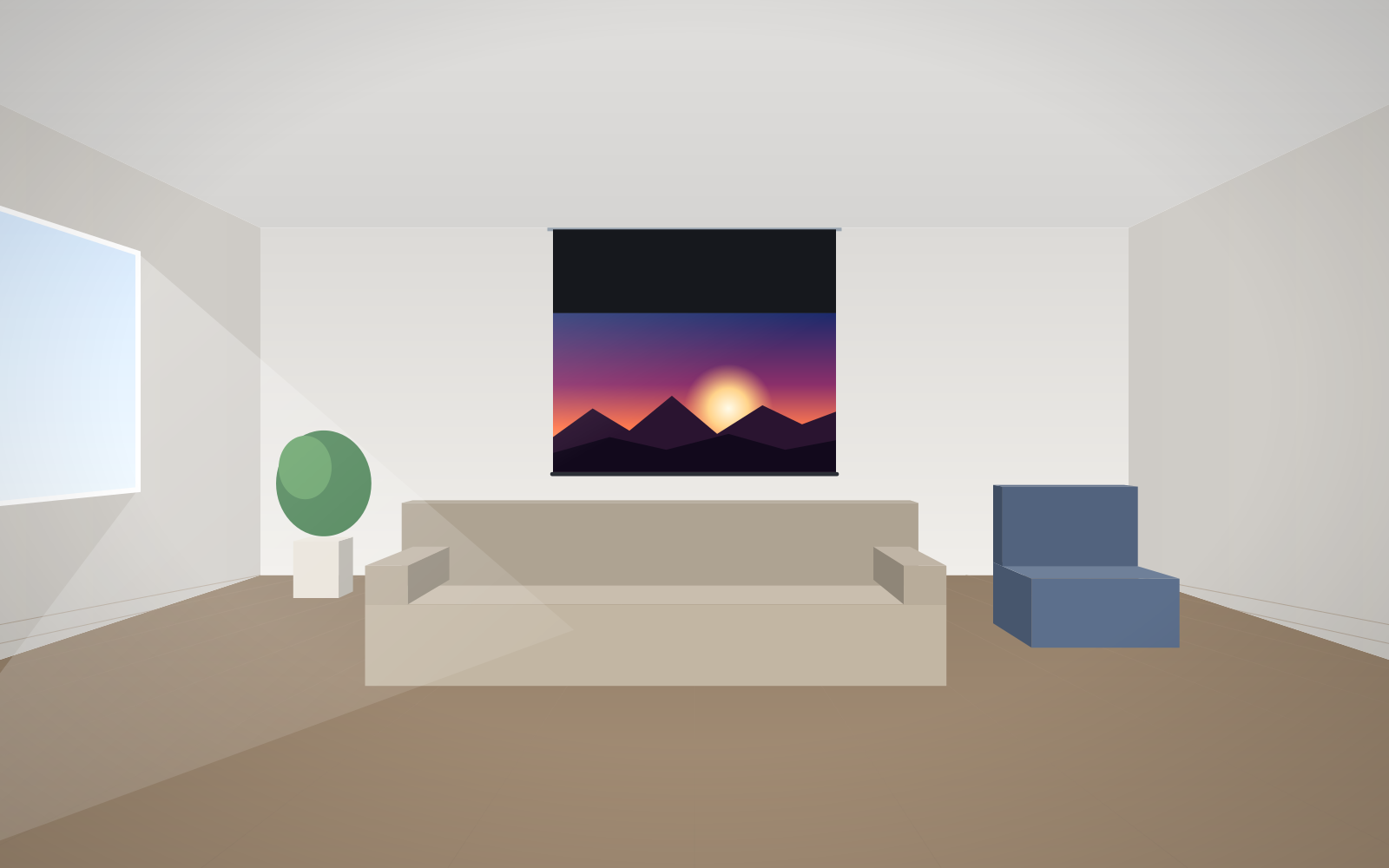
Projector and screen or a TV?
Projector and screen or an 85–100-inch TV? We compare size, cost per inch, daylight, ALR, UST, convenience and space. Find out when each one wins.
Rugby PLUS or Rugby PRO – comparison
Rugby PLUS and Rugby PRO are twin ADEO motorised screens. We compare construction, noise damping, motors, fabrics and Tensio versions to make the choice easier.
Plano, Prestige or Frameless – fixed-frame screens
A comparison of ADEO fixed-frame screens: Plano with a velvet frame, Prestige with a 10 mm frame and Frameless with no visible frame. Profile, tensioning, mounting, sizes.
Screen case and frame colour
How to match the colour of the screen case and frame to your interior: white, black, Grinz or Emboss textures, RAL colours, black fabric borders and a velvet frame for home cinema.
Made-to-measure screens – ordering step by step
How to order a made-to-measure ADEO projection screen: what to measure before using the Configurator, what details to prepare, and how payment, production and delivery work.
Basic and Linear SE – economical motorised screens
Basic and Linear SE are ADEO's economical motorised screens. We compare sizes, fabrics and finishes, and explain when a Rugby series model is the better choice.
Home cinema
Living rooms, cinema rooms, UST projectors and sound behind the screen.
How to choose a home cinema screen – the complete guide
How to choose a home cinema screen: cinema room or living room, fixed-frame, motorised or in-ceiling screen, size using the Ds/2.5 formula, fabric, 2.35:1 format and a checklist.
Screen for a bright living room
Screen for a bright living room: when to choose ALR Ambient Grey 2 fabric, and when Ambient Grey or Reference Grey 2 for UST. Projector brightness, blinds, tensioning.
Screen for an ultra-short-throw (UST) projector
Screen for an ultra-short-throw UST projector: why roller screens ripple, which screen and fabric to choose (Reference Grey 2, Ambient Grey), sizes 90–120 inches.
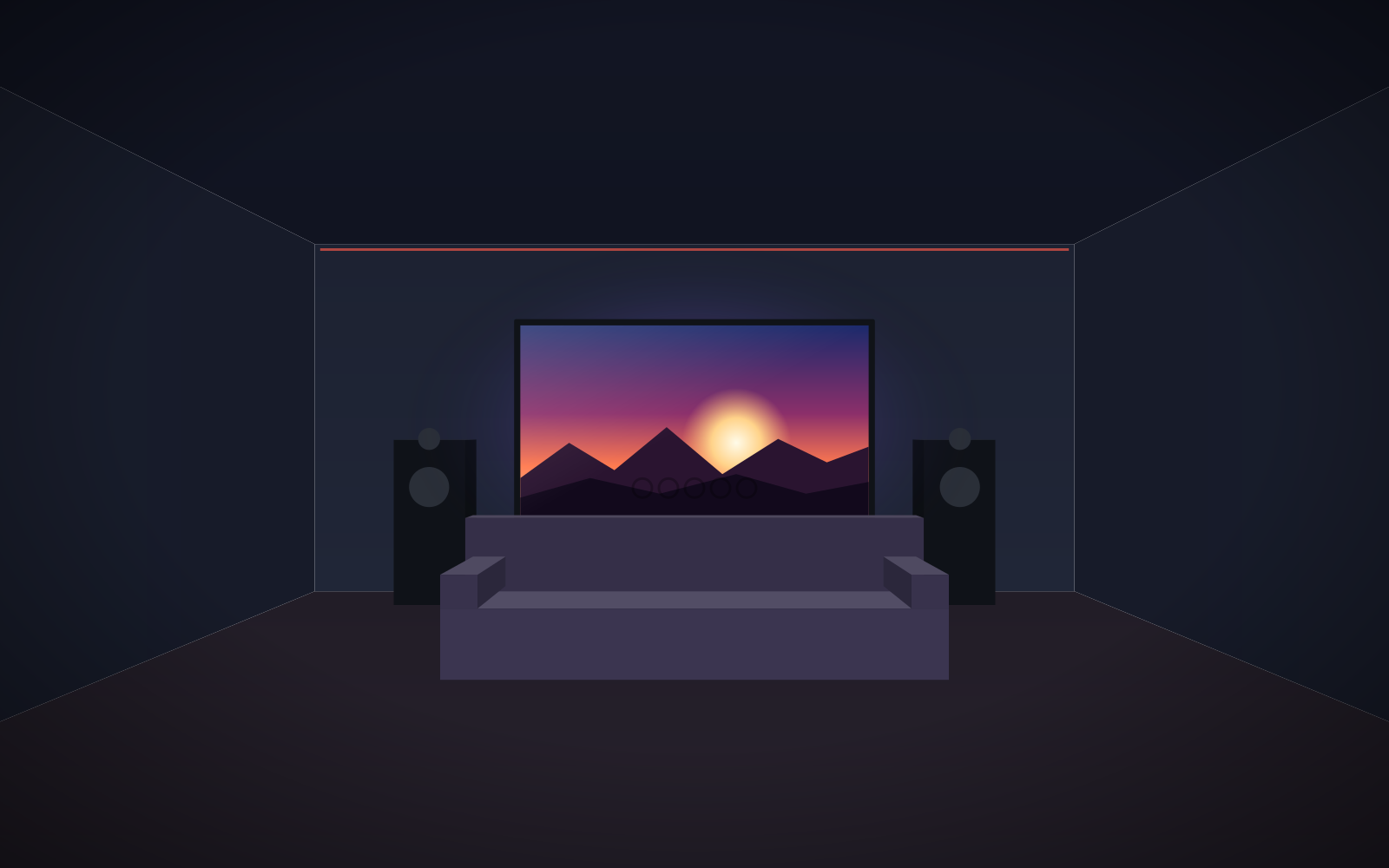
Acoustic screen – speakers behind the screen
Acoustic screens step by step: 0.5 or 1.3 mm perforation, Acoustik fabrics, speaker distance from the screen, gain, moiré and when such a screen makes sense.
Curved or flat screen
Curved or flat screen? When curvature helps, projector requirements, the 2.35:1 format, drawbacks, and the Plano Curved, Frameless Curved and Cinema Curved models.
Quiet motorised screens – what affects noise
What determines how loud a motorised screen is: motor, roller, case, bottom bar and installation. Noise-reducing features in ADEO screens for home cinemas and meeting rooms.
Business, education, events
Meeting rooms, schools, lecture halls, public tenders and rental.
How to choose a conference room screen
How to choose a projection screen for a conference room: D/6 and D/4 sizing, 16:10 format, in-ceiling or cased screen, control, video conferencing and projects.
Projection screen for a school
How to choose a projection screen for a school: size for classrooms and labs, aspect ratio, durability, safe installation, screen with projector, holiday installation and tenders.
Screen for an auditorium and lecture hall
How to choose a large projection screen for an auditorium, lecture hall or theatre: size, the Alumid, Max One, Big One, Max Inceel and Cinema models, fabrics and installation.
Projection screens in public procurement
How to specify a projection screen in a public tender without naming a brand: image size, aspect ratio, fabric, gain, control, documents. Sample specification.
Screens for events and rental
How to choose a screen for events, conferences and rental companies: folding FramePro frames, Easy and Eyelets surfaces, rear projection, truss mounting.
Cinema and Cinema Curved screens – for cinemas and theatres
Cinema and Cinema Curved fixed-frame screens from 7 to 23 m: frame construction, welded seams, cinema formats, acoustic fabrics and sizing for a cinema or theatre.
Round circular screen – 360° immersive projection
The Round cylindrical screen for immersive projection: 2–20 m diameter, 30–360° angle, permanent and temporary installation. Uses in museums, education and simulators.
Easy Surface or Eyelet Surface – fabric for truss
Easy and Eyelet surfaces for mounting on truss or a frame: how the fixing differs, how to choose cords, aspect ratio, width and fabric for a stage or event.
Alumid, Max One or Big One – large-format screens
A comparison of ADEO large-format screens: Alumid 3.5–4.5 m, Max One up to 6.5 m and Big One up to 8.5 m. Tensioned versions, case, fabrics, installation and brackets.
Screens for council chambers and public offices
How to choose a projection screen for a council chamber or public office: size for legible documents, installation in a tall room, control and fire ratings.
Screens for churches, auditoriums and high-vaulted interiors
Projection screens for churches, auditoriums and high-vaulted interiors: lowering the image with a black top drop, when to use a lift, screen size and installation.
Screens for hotels, banqueting suites and event spaces
How to choose screens for a hotel: 2–3.5 m conference rooms, banqueting and divisible rooms, in-ceiling screens, Frameless, event screens and case colours.
Projector and screen or interactive display?
Projector and screen or a 55–98 inch interactive display for a classroom or meeting room? Image size, legibility, brightness, touch and using both together compared.
Fabrics & image quality
White, grey ALR, gain, rear projection and ChromaKey.
Projection fabrics – how to choose
How to choose a projection screen fabric: white, grey, ALR, acoustic, rear projection and ChromaKey. Gain and viewing angle table, decision tree.
ALR and grey screens – when they are worth it
How ALR screens and grey projection fabrics work: Ambient Grey 2, Ambient Grey and Reference Grey 2. Viewing angle, UST projectors, flatness and bright rooms.
Screen gain and viewing angle
What projection screen gain is and how it affects image brightness and viewing angle. Luminance formula in nits, worked examples and matching the fabric to the projector.
Rear projection – screens for rear projection
Rear projection step by step: when it is worth it, how much space behind the screen, mirrors, image flipping, Vision Rear DB and Vision Fold Rear 2 fabrics, choosing a screen.
Green screen on a roller screen – ChromaKey backdrop
ChromaKey RAL 6038 green backdrop in a roller screen: for studios, streaming and schools. How to choose the size, light the backdrop and avoid common keying mistakes.
Fire ratings of projection fabrics
What the fire ratings B-s2,d0, M1 and M2 mean for projection fabrics, which classes the ADEO catalogue gives for each fabric and how to ask for them in a public building.
Screens for laser and 4K projectors
Which screen for a laser or 4K projector: 4K-ready fabric, flatness, gain versus lumens, viewing distance, UST projectors and what a screen cannot do.
Installation, control, servicing
Installation, common mistakes, control, tensioning and maintenance.
Where not to install a screen – the most common mistakes
The most common mistakes when choosing and installing a projection screen: wrong location, height, ceiling, power, UST and ALR. Consequences, solutions and checklists.
Installing a motorised screen
How to install a motorised screen: wall or ceiling, brackets and extensions with load ratings, mounting height, black drop, 230 V power and cable preparation.
How to prepare a ceiling for a recessed screen
Screens in a suspended ceiling: Inceel, InSuperior, Max Inceel. How to prepare the recess, power and service access, and when to install the case during the works.
Controlling a motorised screen
How to control a projection screen: wall switch, radio remote, infrared, 12 V trigger from the projector, RS232 and room control systems. Options compared.
Tensio tensioning – how it works and when to choose it
Tensioned Tensio screens: why roller fabric ripples, how Tensio Classic, CTS, Floating Tensio and MFTS work, and when tensioning is needed.
Cleaning and maintaining a projection screen
How to clean a projection screen: dust, stains and fingerprints, what not to do with the fabric, how to look after motorised and fixed-frame screens, and when to call for service.
Lift Screen screen lift – high rooms
When a screen hangs very high, you can lower the image with a black top drop or a Lift Screen lift. We explain how the lift works, what it works with and what to choose.
FramePro – FB, RB, FE and RE versions and frame assembly
FramePro is a folding ADEO fixed-frame screen in four versions. We explain the differences between FB, RB, FE and RE, fabric choice and mounting on a wall, legs or truss.
How a motorised screen is built
What a motorised screen is made of: case, double-groove roller, springs, bottom bar, welded edges and tubular motor. What affects durability.
Roll direction: back, front or Reverse Roll
How back roll, front roll and Reverse Roll differ, how they change the distance from the wall, and when they help you clear a window sill, radiator or wall trim.
Black top drop with a high ceiling
How to choose the length of the black band (drop) above the image when the case hangs high: ranges on ADEO models, the 15° rule, a worked example and when a lift helps.
Delivering, unpacking and receiving a large screen
How to prepare for delivery of a large projection screen: the route in, checking the consignment on receipt, unpacking and storing it before installation.
Installing a fixed-frame screen step by step
How to assemble the frame, tension the fabric and hang a Plano, Prestige, Frameless or FramePro fixed-frame screen: on a wall, on legs or on truss, step by step.