- The case is longer than the image width – measure the route in: doors, corridors, corners, stairwell and lift.
- On receipt, inspect the packaging in the courier's presence and note any damage in the delivery report.
- Carry the case with at least two people, supporting it along its full length – never by the fabric or the bottom bar.
- Until installation, store the screen in its packaging in a dry room, away from radiators.
- Leave connecting the motor to the 230 V supply to an electrician.
How an ADEO screen is prepared for transport
Every ADEO screen is made to measure and packed in packaging designed for the specific model. Roller screens are tested on an inspection bench before packing, so they reach the customer already adjusted. We ship anywhere in Poland at no extra transport cost – details are on the Delivery & payment page.
What arrives depends on the type of screen:
| Screen type | What arrives | What to watch for |
|---|---|---|
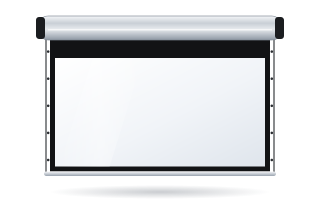
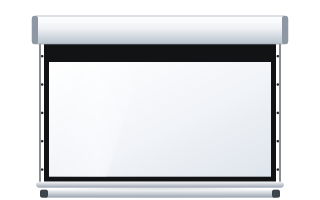
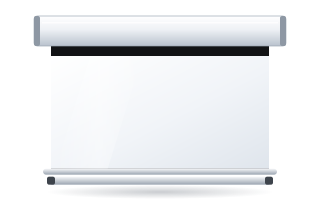
| Wall/ceiling roller screen (e.g. Rugby, Alumid) | case with the fabric rolled up, brackets | package length, do not bend the case |
| Large-format (Max One, Big One) | very long case, bracket set | route in, number of people to carry it |
| In-ceiling (Inceel, Max Inceel) | case, suspension components | coordinate delivery with the ceiling contractor |
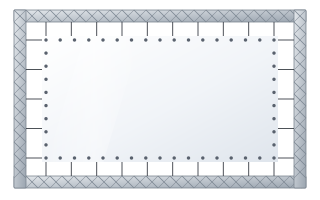
| Fixed-frame (Plano, Prestige, Frameless) | frame profiles, fabric, tensioning components | the fabric must not be creased or soiled |
| Folding FramePro, Easy and Eyelets surfaces | frame in sections, fabric, rods or cords | a complete set of parts before setting off for an event |
Before the courier arrives – measure the route in
The most common problem with a large screen is not the screen itself but the package not fitting along the route to the room. The case is always longer than the image width because it houses the motor and end caps. Examples of case dimensions from the model datasheets:
- Alumid – image 3.5–4.5 m, case cross-section approx. 152 × 142 mm,
- Max One – image approx. 4.6–6.5 m,
- Big One – image 6–8.5 m, case cross-section approx. 270 × 270 mm.
A package 7–9 m long needs a straight route. Check:
- that there are no tight corridor corners on the way to the room that a long item will not get round,
- that the stairwell allows the package to be turned on the landing,
- that the goods lift is long enough – a passenger lift is usually out of the question for large screens,
- whether the screen can be brought in through a wider entrance, a service door or a stage loading door,
- that there is space for unloading and access for a delivery van.
In public buildings – auditoriums, halls, community centres – agree the delivery time with the building manager and name the person who will receive the consignment.
Receiving the consignment – what to check with the courier
- Inspect the packaging along its full length before signing for it. Look for crushing, breaks, punctures and signs of water.
- Check the number of packages against the consignment note. Brackets, remotes or frame components may travel separately.
- If there is visible damage, complete a damage report with the courier and take photos. Do not throw the packaging away.
- Contact us as soon as possible via the Contact page, giving your order number and photos.
These are general rules, but they matter especially for large, long consignments – transit damage is easier to resolve straight away than after a few days.
How to carry a roller screen case
- Carry the case with at least two people, and more for large-format screens. A long item must not sag.
- Hold it by the body of the case, supporting it at several points. Do not grip the bottom bar or the fabric.
- Do not stand the case upright on one end or rest it on the edge of a table halfway along.
- Do not unroll the fabric by hand. Lower it for the first time only after installation and once the motor is connected.
- Do not remove the protective packaging from the case earlier than necessary. The screen has a warranty seal – do not break it.
Unpacking a fixed-frame screen and truss surfaces
Fixed-frame screens are delivered in parts: profiles, corners and fabric. The frame of the folding FramePro is split for transport – the width or height in two parts. On the Easy surface, the bottom rod is always split into two parts for shipping.
- Unpack on a clean, dry, smooth surface – ideally on a sheet of plastic or clean cardboard.
- Do not cut the packaging with a knife near the fabric. Only cut the tapes at the edges of the box.
- Wear clean gloves – fingerprints on white fabric will later show in bright scenes.
- Count the parts before you start assembly and put small parts together in one container.
Frame assembly itself is described in our guide installing a fixed-frame screen step by step.
In-ceiling screens – delivery during construction
In-ceiling screens usually arrive on site while the suspended ceiling is still open. The Inceel case comes with a suspension kit: eight 50 cm threaded rods (mounting height up to 1 m) and trim caps to conceal the fixings in the plasterboard. The large-format Max Inceel has two fixing systems – for ceilings with and without access from inside – so it can be installed before or after the ceiling is closed.
- Agree with the ceiling contractor when the case needs to be on site and who will receive it.
- Keep the fixing components together with the case – lost rods or caps can hold up the work.
- Once the case is installed, protect the slot from dust until sanding and painting are finished.
Storing the screen until installation day
A screen often arrives before building work is finished. In that case:
- keep it in its original packaging, lying flat and supported along its full length,
- choose a dry room – free of dust from wall sanding and moisture from screed,
- do not leave it by a radiator, in full sun or next to a window. The manufacturer advises against installing fabrics in places exposed to strong light, sunlight and heat sources – all the more reason not to store them in such conditions,
- do not stack other materials on the package.
Who installs a large screen
A roller screen several metres wide is installed at height, and large-format screens are heavy enough to need a solid substrate and suitable brackets. Max One installation kits include brackets, bolts and chains with carabiners. When planning installation:
- check the load-bearing capacity of the ceiling or wall and choose anchors to suit the substrate,
- arrange scaffolding or a lift and enough people,
- have an electrician connect the motor to the 230 V supply.
Installation details are in our guide installing a motorised screen, and a list of the most common mistakes is in common screen installation mistakes. ABC Prezentacji does not install screens: a large screen is best fitted by an experienced installer, and the power connection should be made by an electrician. Before you order, we will advise you on preparing the site.
First use
After installation, lower the screen fully and watch whether the fabric comes down evenly and stops at the set positions. Check that the case is level. If there is building dust on the fabric, remove it as described in our guide cleaning and maintaining your screen.
Frequently asked questions
Do I pay for delivery of a large screen?
No. Large screens are also shipped anywhere in Poland at no extra transport cost. Delivery is to the address you provide, without carrying in – arrange people to carry the screen.
What should I do if the screen packaging is damaged?
Complete a damage report with the courier, take photos, keep the packaging and contact us with your order number.
How many people are needed to carry the screen in?
Carry the case with at least two people, and more for large-format screens, so that the long item is supported along its full length and does not sag.
Can I unroll the fabric by hand to inspect it?
Please don't. Lower it for the first time once the case is installed and the motor is connected.
How should I store the screen before installation?
In its original packaging, lying flat, in a dry room, away from radiators, sunlight and building dust.