- For business rooms the ADEO distributor recommends screens 2–3.5 m wide, with larger ones for banqueting and event spaces.
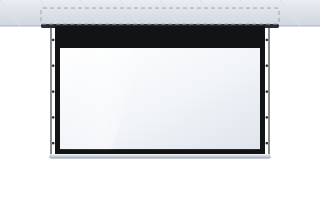
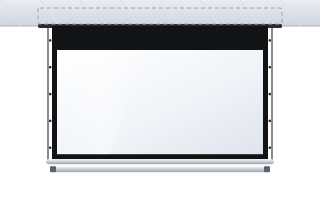
- An in-ceiling screen disappears when rolled up, and the concealed case does not block access to services in the ceiling.
- The manufacturer recommends Frameless for professional venues, including hotels, with images up to 7 m wide.
- In divisible rooms, plan a screen for every section plus shared control.
- For events, folding FramePro frames and Easy surfaces for truss are all you need.
What rooms a hotel has and what they need
A conference hotel usually has several kinds of room, each placing different demands on the screen:
| Room type | Typical use | What matters |
|---|---|---|
| Meeting room (up to a dozen or so people) | board meetings, negotiations, training | looks, quiet operation, legibility at close range |
| Divisible conference room | parallel training sessions, conferences | a screen in each section, shared control |
| Banqueting suite | weddings, galas, anniversaries, conferences | large image, bright room, screen invisible day to day |
| Event space, foyer | trade shows, launches, events for external companies | mobility, quick set-up, rear projection |
A hotel buys screens for years of heavy use. A screen is lowered several times a day, it is operated by different people, and guests expect everything to work first time.
Conference and meeting rooms – a 2–3.5 m screen
The ADEO screen distributor recommends an image width of 200–350 cm for typical business rooms. Work out the exact size from the distance to the furthest seat: image height is 1/6 of that distance for presentations and 1/4 for tables and charts. Example: with 9 m to the last chair, a presentation needs an image 1.5 m high, i.e. 2.4 m wide in 16:10.
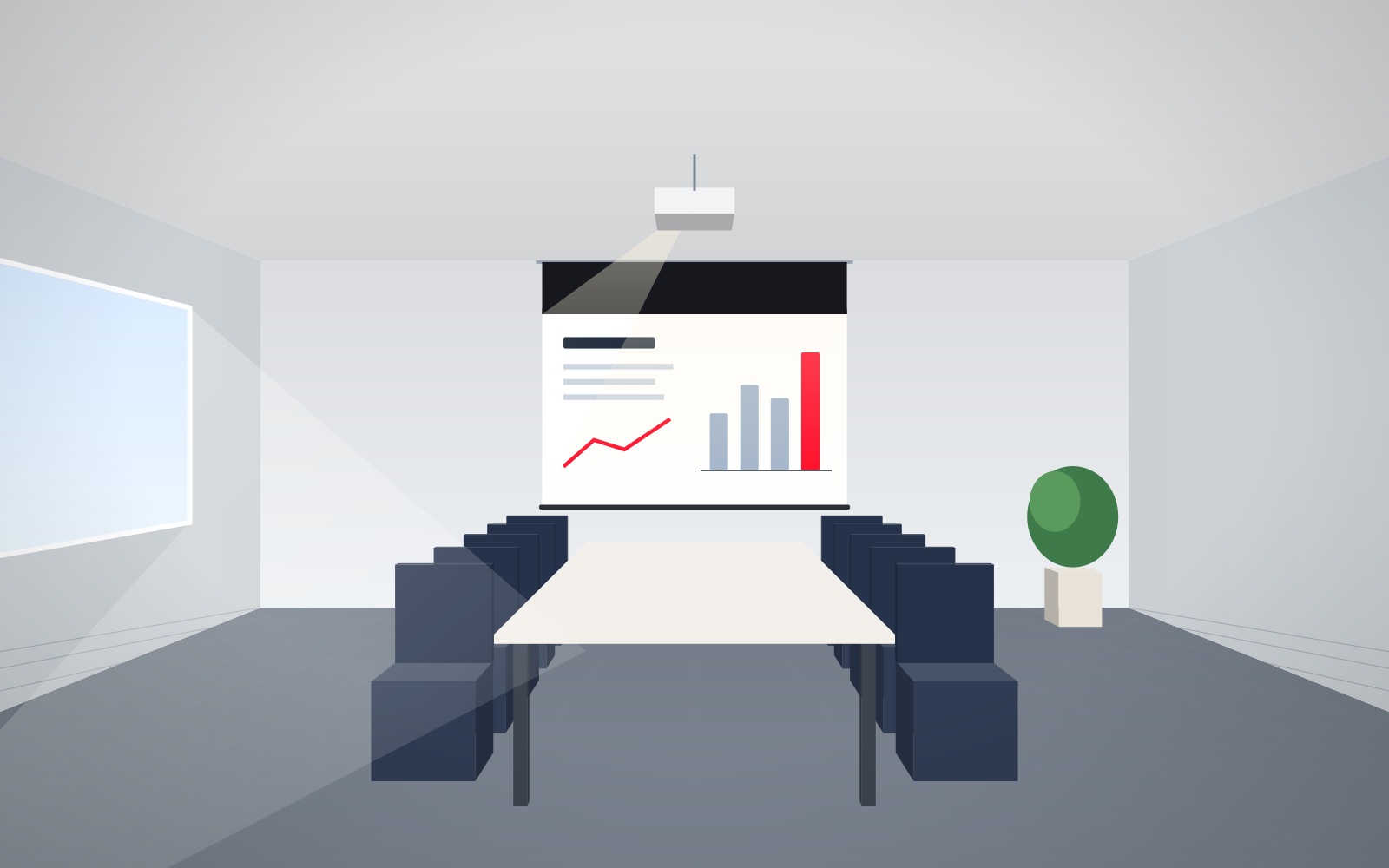
For rooms with a suspended ceiling, an in-ceiling screen is the best fit. When rolled up, the Inceel (image 1.8–4 m) leaves only a narrow slot. The distributor points out that the concealed case does not block access to services in the ceiling. In formal rooms and boardrooms consider the InSuperior with Floating Tab tensioning – the fabric stays flat, and a long black top drop lowers the image in tall rooms.
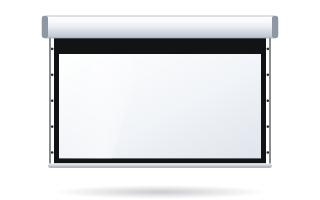
Where there is no suspended ceiling, a cased screen for wall or ceiling mounting will do the job. The manufacturer designs the Rugby Pro for commercial installations: it has steel end caps and bottom bar, plus a case that limits motor vibration. It is a good choice wherever the screen is used every day.
Rooms divided by movable walls
Large hotel rooms are divided by movable walls into two, three or four sections. Screens must be planned to work in every configuration:
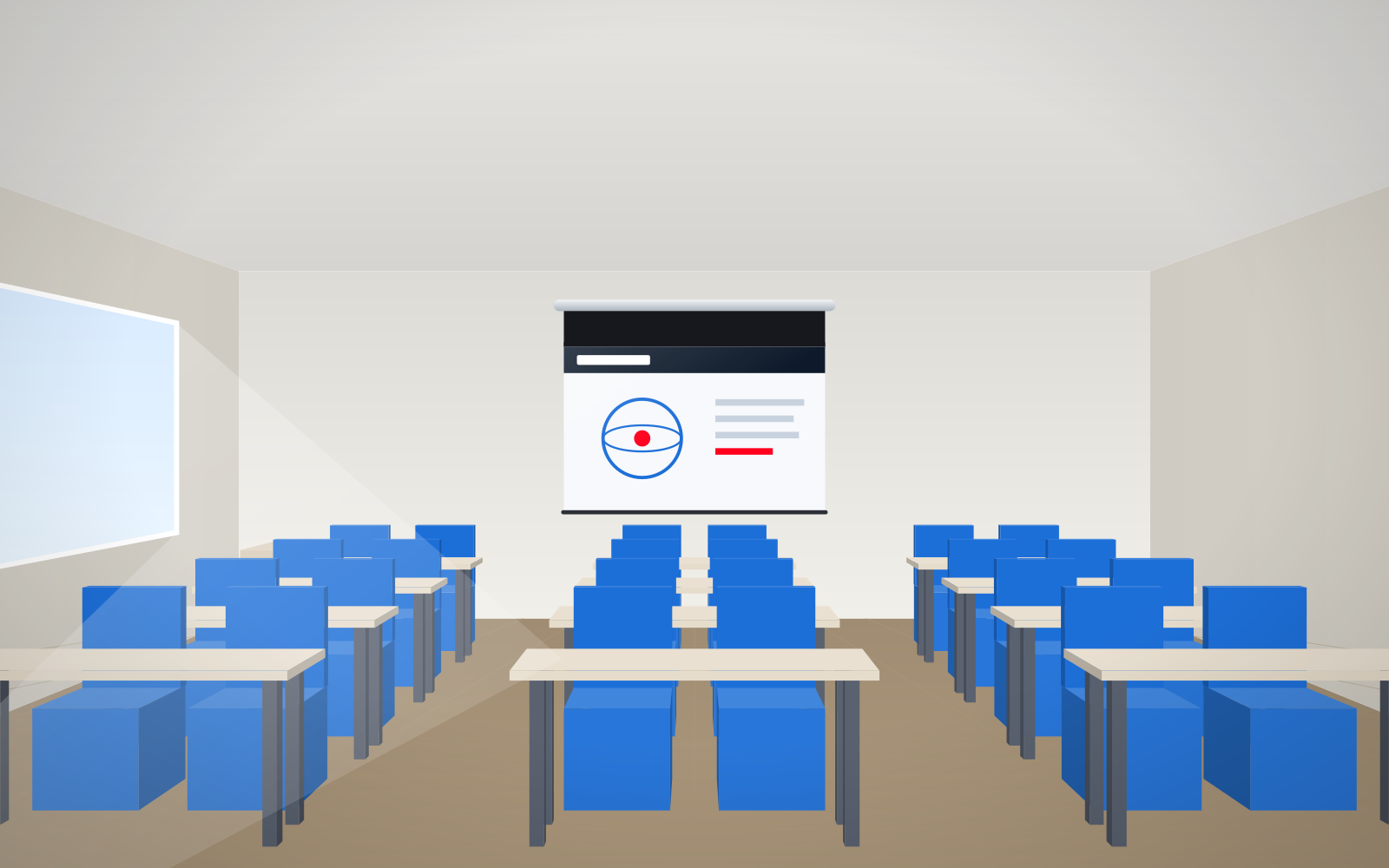
- A screen in each section – every part of the room needs its own image when the walls are closed.
- Main screens for the whole room – when the room is open, one large screen or several screens showing the same image are useful.
- Clashes with the wall track – the case must not clash with the movable-wall rail or light fittings.
- Shared control – screens are best controlled from the room system via an RS232 interface or a 12 V trigger from the projector. A radio remote can operate one or several screens.
Control options are described in our guide controlling a motorised screen.
Banqueting suite – a big image that disappears
In a banqueting suite the screen is needed occasionally: for a conference, a photo slideshow at a wedding, a gala. The rest of the time it should be invisible. That is why the usual choices are:
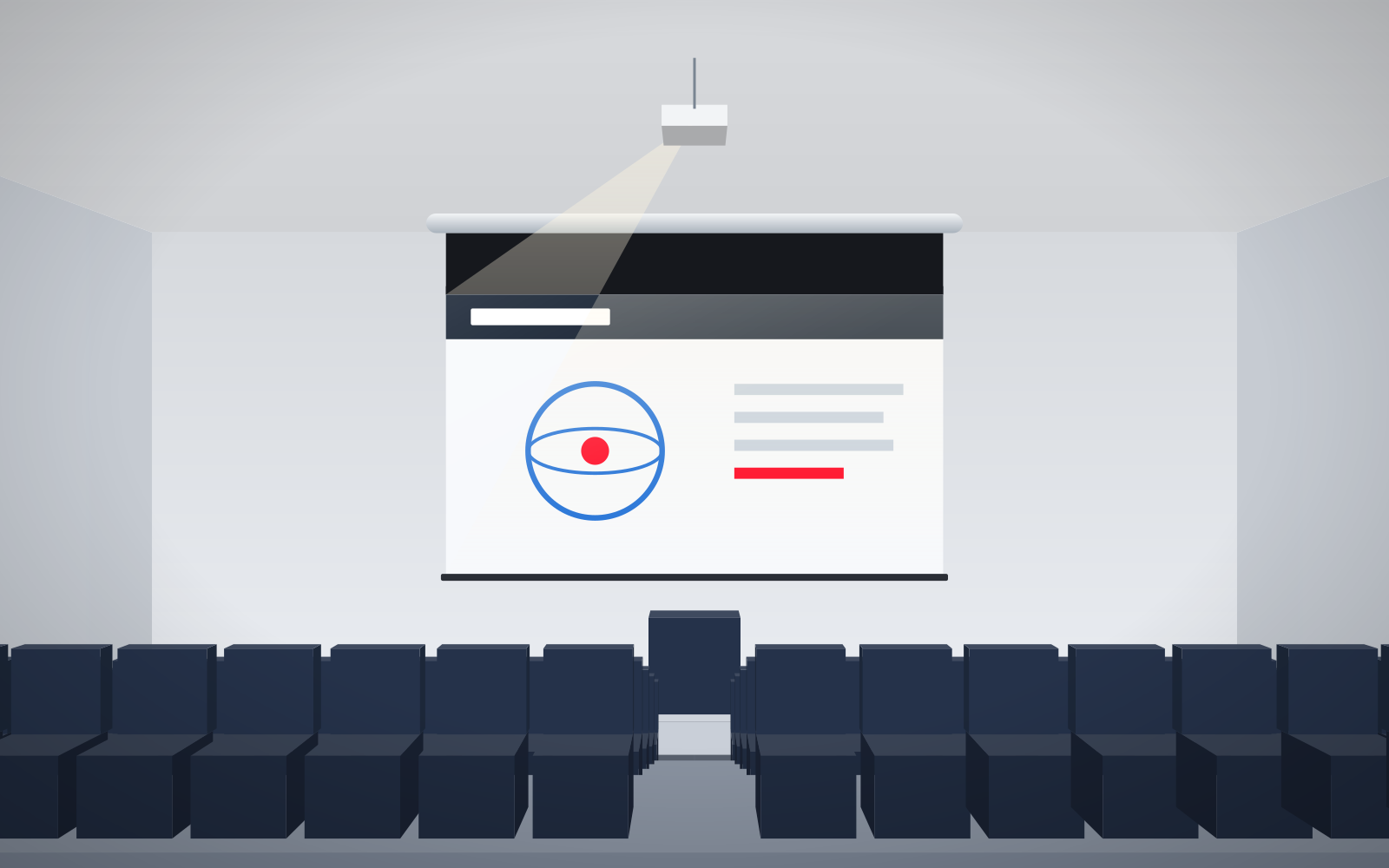
- an in-ceiling screen – the Inceel or InSuperior, and in the largest rooms the Max Inceel with an image of up to 6.5 m,
- a cased screen in the wall colour – the case can be ordered in a chosen RAL colour, making it easier to blend into the décor,
- a large-format screen – when the room is very large and the image needs to be more than 4.5 m wide.
Banqueting suites can rarely be darkened – there are chandeliers, windows and decorations. Vision White fabric (gain 1.2) gives the brightest image from a given projector. Image brightness, however, depends above all on the projector and the screen size, as we show in our guide screen gain and viewing angle.
Frameless – the screen as part of the décor
In a lobby, restaurant or formal room the screen can be a permanent part of the interior. Frameless has a frame completely hidden beneath the fabric, mounted flush with the wall using a magnetic kit. The image looks as though it is floating on the wall. The manufacturer recommends Frameless for homes up to about 4 m wide and for professional venues – hotels, conference rooms and meeting rooms – up to 7 m. A comparison with other frames is in our guide Plano, Prestige or Frameless.
A fixed-frame screen is always tensioned, so it suits places where projection is frequent or the wall is dedicated to the image anyway.
Hotel events – mobile screens
Hotels that host trade shows, launches and large conferences need portable screens. Two typical solutions:
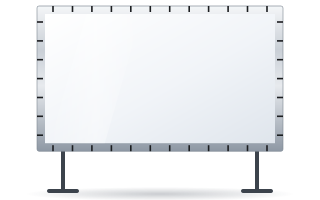
- FramePro – a folding aluminium frame that breaks down for transport, with the fabric attached by press studs or cords. It can stand on stands, hang on a wall or on truss. Versions for front and rear projection.
- Easy Surface – fabric made to measure, attached to truss with elastic cords. It lets you build a large stage screen.
Rear projection is useful on stage: the projector sits behind the screen and the speaker does not walk into the beam. Read more in our guide screens for events and hire.
Durability and quiet operation in daily use
A hotel screen is operated by reception staff, technicians and guests themselves. It is lowered during conferences, often in a full room. So it is worth looking at the features the manufacturer builds into ADEO screens:
- Motor vibration damping – a rubber plate between the motor and the case reduces noise when the screen is lowered. The Rugby Pro also has a case with a snap-fit system that limits vibration.
- A bottom bar that closes the case – on the Rugby, Inceel and InSuperior models the bar closes the case when rolled up and protects the fabric from dust.
- A flat fabric without marks – a double-groove roller and springs at the bottom bar limit creasing, even when the screen is used several times a day.
- Factory check after assembly – every roller screen goes onto a test bench once assembled.
In a venue where rooms are booked almost every day, service matters too. ABC Prezentacji provides advice and servicing of screens throughout Poland. How to look after the fabric is described in our guide cleaning and maintaining your screen.
Safety and documentation
A hotel is a public building, so the client or fire safety consultant may require a particular reaction-to-fire class for the fabric. The manufacturer lists the class for each fabric in its catalogue, and the current declaration for the chosen material is issued by the manufacturer. Every screen carries the CE mark. Details are in our guide fire ratings of projection fabrics.
Hotel checklist
- A list of rooms with dimensions and the distance to the furthest seat.
- Ceiling type in each room and space for the case.
- Layout of movable walls and sections.
- Case or frame colour matched to the interior.
- Control method and integration with the room systems.
- Mobile screens for events and somewhere to store them.
- Required fire rating of the fabric.
Prices for every configuration are in the Configurator for business & institutions. ABC Prezentacji also provides advice on preparing the site and ships at no extra transport cost – get in touch.
Frequently asked questions
What screen for a hotel conference room?
In a typical business room an image 2–3.5 m wide works well. With a suspended ceiling, an in-ceiling screen such as the Inceel or InSuperior looks best; in other rooms, a cased screen such as the Rugby Pro.
How should I plan screens in a room divided by movable walls?
Each section should have its own screen, and the cases must not clash with the wall track. The screens are best controlled together from the room system.
Can the screen case be colour-matched to the interior?
Yes. As well as a white or black case, you can order a RAL colour, depending on the model.
Is Frameless suitable for a hotel?
Yes. The manufacturer recommends Frameless for professional venues, including hotels and conference rooms, with images up to 7 m wide.
What screen for events held at a hotel?
A folding FramePro frame on stands or a wall, or an Easy surface attached to truss. Both come in front and rear projection versions.